

Pediatric Trach and Vent Care at Home: Nursing, Training & Safety Planning
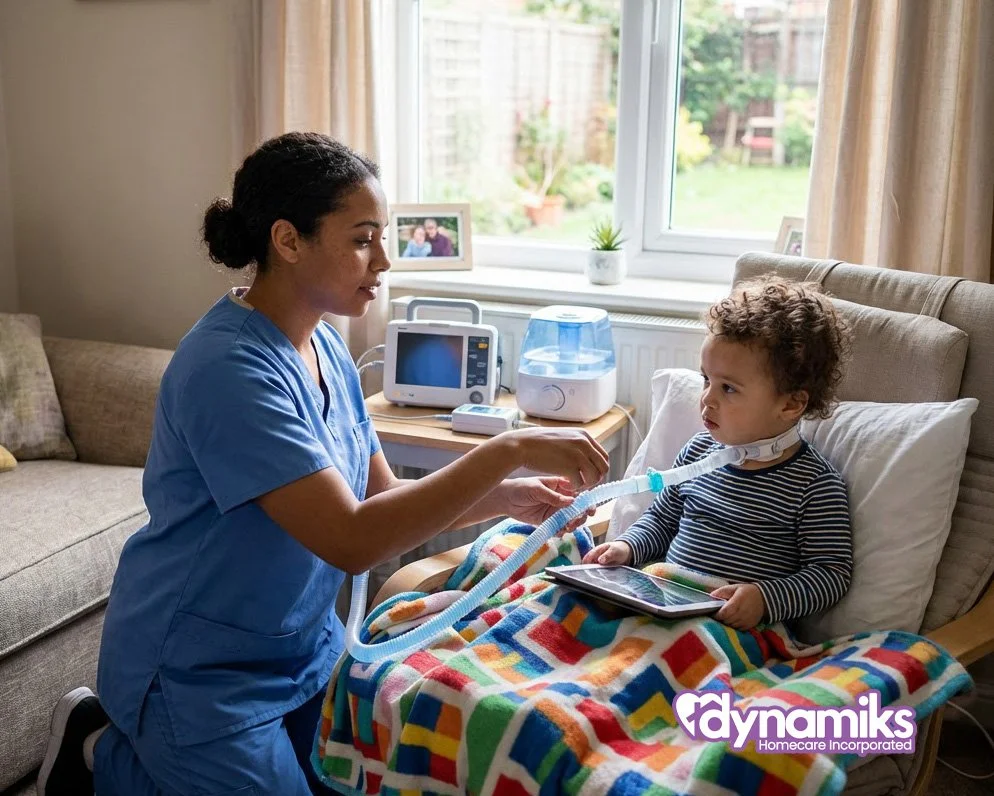
What is pediatric trach and vent care at home?
Pediatric trach and vent care at home is coordinated support for a child who has a tracheostomy, uses mechanical ventilation, or has other complex respiratory needs after the child's medical team determines that home care is appropriate. Depending on the child, the plan may involve trained family caregivers, pediatric private duty nursing, prescribed respiratory equipment, monitoring, caregiver education, emergency planning, specialty follow-up, and coordination between the hospital, physicians, equipment provider, home health agency, and payer.
What does pediatric trach and vent care at home involve?
Children with tracheostomies and ventilator needs are medically diverse. Some children require mechanical ventilation only during sleep, while others need respiratory support for longer portions of the day. Some children have a tracheostomy but do not depend on a ventilator.
Because of those differences, pediatric trach care should be based on the individual child rather than the diagnosis or equipment alone.
Depending on the child's orders and approved plan of care, home support may address:
- Tracheostomy and airway-related care.
- Prescribed ventilator support and respiratory monitoring.
- Airway suctioning when clinically indicated and included in the plan of care.
- Medication administration according to applicable orders.
- Enteral feeding or other skilled nursing needs when applicable.
- Monitoring for changes from the child's established baseline.
- Caregiver education and reinforcement of the home care plan.
- Documentation and communication with the appropriate healthcare team.
A tracheostomy creates an airway through the neck. A mechanical ventilator provides breathing support. A child may have one or both, so equipment, monitoring, caregiver training, and nursing needs vary considerably.
Why is caregiver training important before a child comes home?
Professional home nursing does not replace the child-specific training provided to parents and caregivers before discharge. Families caring for children with complex respiratory needs may need hands-on education and competency checks from the treating hospital and respiratory team.
Training may address the child's routine respiratory care, prescribed equipment, monitoring, tracheostomy care, signs of change, communication with providers, backup planning, and the child's individualized emergency procedures.
The American Thoracic Society recommends that an awake and attentive trained caregiver be present in the home at all times for children requiring chronic invasive ventilation. It also suggests that at least two family caregivers be specifically trained for the child's home care. :contentReference[oaicite:2]{index=2}
Online information cannot replace hands-on respiratory training.
Tracheostomy procedures, ventilator troubleshooting, emergency airway care, equipment operation, and emergency response should follow the child-specific training and written plan provided by the treating team.
What can a pediatric home nurse help with?
Pediatric private duty nursing may support children who have complex or ongoing skilled needs at home. The exact nursing responsibilities depend on the child's clinical status, applicable orders, nursing scope, assessment, payer authorization, and approved plan of care.
When appropriate, a pediatric nurse's shift may include:
- Respiratory and general clinical assessment.
- Observation of prescribed respiratory equipment and ordered parameters.
- Tracheostomy-related nursing care.
- Airway suctioning when ordered and indicated.
- Medication administration according to the care plan.
- Enteral feeding support when included in the child's orders.
- Monitoring for changes from the child's baseline.
- Documentation of care and clinical observations.
- Communication with the appropriate healthcare providers.
- Reinforcement of caregiver education and established routines.
A tracheostomy, ventilator, or particular diagnosis does not automatically determine the number of nursing hours. Daytime, overnight, or extended-shift nursing depends on clinical need, applicable orders, payer criteria, authorization, approved hours, location, and availability of appropriately qualified staff.
What should happen before hospital-to-home transition?
Moving from the hospital to home is a coordinated process. The child's treating team determines clinical discharge readiness, while families, equipment providers, home health agencies, case managers, and payers may each have responsibilities before services begin.
ATS guidance recommends standardized discharge-readiness criteria for children requiring chronic invasive ventilation and highlights caregiver training, ongoing education, equipment maintenance, monitoring, and backup resources as important components of home planning. :contentReference[oaicite:3]{index=3}
Who is responsible for different parts of trach and vent care?
One of the most common sources of confusion after discharge is understanding who manages the child, who provides nursing, and who supplies the respiratory equipment.
Physicians & Specialists
Determine medical treatment, respiratory management, applicable orders, follow-up care, and changes to the child's prescribed medical plan.
Pediatric Nurses
Provide skilled nursing within professional scope and the approved home care plan, including assessment, ordered respiratory support, medications, documentation, and care coordination.
Trained Caregivers
Follow the child's hospital training, established routines, monitoring instructions, and emergency plan while communicating changes or concerns to the appropriate clinical team.
DME / Respiratory Provider
Supplies and services prescribed respiratory equipment according to applicable orders and supplier responsibilities. Home health nursing is separate from durable medical equipment supply.
How is safety planned for pediatric trach and vent care at home?
There is no universal statement that home respiratory care is automatically safe for every child. Safety depends on whether the child is medically ready for home care and whether the necessary caregivers, equipment, training, monitoring, follow-up, emergency planning, and other supports are in place.
The home plan may address:
- Child-specific emergency instructions.
- Backup respiratory equipment when prescribed.
- Backup battery or power planning.
- Portable suction equipment.
- Monitoring prescribed by the medical team.
- Equipment maintenance and replacement processes.
- Emergency contact procedures.
- Caregiver competency and ongoing education.
The 2025 ATS pediatric tracheostomy guideline also recommends that an awake and alert trained caregiver always be present for children at risk of immediate deterioration from tracheostomy-related complications. :contentReference[oaicite:4]{index=4}
Follow the child's individualized emergency plan.
If a child has severe trouble breathing, becomes unresponsive, develops severe color change, or appears to have another life-threatening emergency, follow the child's emergency instructions and call 911 as appropriate. A general website should never replace hands-on trach, ventilator, or emergency training.
Does Medicaid or insurance cover pediatric trach and vent nursing?
Insurance or Medicaid may cover qualifying pediatric home nursing when applicable requirements are met. Coverage varies by plan and may depend on medical necessity, practitioner orders, clinical documentation, authorization, approved hours, network requirements, and the child's plan of care.
A ventilator or tracheostomy does not automatically guarantee private duty nursing or a specific number of nursing hours.
Families preparing for discharge can ask the hospital case manager, treating provider, payer, and home health agency which documentation is required and whether prior authorization is needed.
Coverage Learn About Insurance & Home Care Coverage →What should families ask a pediatric home health agency?
When evaluating a home health provider, focus on the agency's ability to support the child's actual clinical and logistical needs.
- Does the agency provide pediatric private duty nursing?
- Does the agency accept children with tracheostomy or ventilator needs?
- How are nurse competencies reviewed for the child's specific plan of care?
- How does the agency coordinate with the hospital and physicians?
- How are changes in the child's condition communicated?
- What is the process if a scheduled nurse becomes unavailable?
- How are insurance authorization and documentation handled?
- Is the child's Florida location within the agency's current service area?
How does Dynamiks Home Care support pediatric trach and vent families?
Dynamiks Home Care works with families, physicians, hospitals, case managers, and other care-team members to explore home health services for medically complex children across multiple Florida communities.
Depending on the child's needs, applicable practitioner orders, payer requirements, approved plan of care, authorization, location, and staffing availability, available services may include pediatric private duty nursing and other appropriate home health support.
Dynamiks Home Care does not guarantee insurance coverage, eligibility, authorized hours, a particular nurse, service availability, or a specific start date.
Specialized Respiratory Care Explore Pediatric Trach & Vent Home Care → Pediatric Nursing Explore Pediatric Private Duty Nursing → Pediatric Services Explore Pediatric Home Care in Florida → Healthcare Professionals Start a Pediatric Home Care Referral →Pediatric trach and vent care at home FAQs
What is pediatric trach and vent care at home?
Pediatric trach and vent care at home is coordinated support for a child with a tracheostomy, mechanical ventilation, or other complex respiratory needs. The home plan may involve trained family caregivers, skilled nursing, prescribed equipment, monitoring, emergency planning, and medical follow-up.
Does every child with a tracheostomy need a ventilator?
No. Some children have a tracheostomy without using mechanical ventilation. Other children may use a ventilator only during sleep, during certain periods, or for more extensive respiratory support.
Can a child with a trach and ventilator live at home?
Some children can receive care at home when their medical team determines they are ready and the necessary caregiver training, respiratory equipment, monitoring, emergency planning, medical follow-up, and home supports are in place.
What does a pediatric trach nurse do?
Nursing responsibilities vary by child. Care may include clinical assessment, tracheostomy-related care, prescribed respiratory support, suctioning when indicated, medications, monitoring, documentation, feeding support, and communication with the healthcare team when included in the approved plan of care.
Can a nurse stay overnight with a child who uses a ventilator?
Overnight nursing may be part of the approved plan for some children. Availability depends on medical and functional needs, applicable practitioner orders, payer authorization, approved hours, service location, and staffing.
Does home nursing replace parent trach and ventilator training?
No. Family caregiver training remains an important part of hospital-to-home preparation. Professional nursing does not replace the individualized education and emergency training required by the child's treating team.
Who provides the ventilator and respiratory equipment?
Prescribed respiratory equipment is generally coordinated through the child's medical team and an appropriate durable medical equipment or respiratory provider. The equipment supplier and home health nursing agency have different roles.
Does Medicaid cover pediatric private duty nursing?
Medicaid may cover qualifying pediatric private duty nursing when applicable medical-necessity, order, documentation, authorization, and program requirements are met. Having a tracheostomy or ventilator does not automatically establish specific nursing hours.
How early should families begin arranging home nursing?
When possible, home-care planning should begin during the hospital discharge process. Orders, documentation, payer authorization, family training, equipment coordination, home assessment requirements, and nursing staffing can all affect timing.
How do families start trach and vent home care with Dynamiks?
Families, physicians, discharge planners, or case managers can contact Dynamiks Home Care to discuss the child's needs and location. The team can then review applicable referrals, orders, clinical documentation, payer requirements, authorization, service-area availability, and staffing needs.
Clinical resources
This article provides general educational information and does not replace the individualized instructions, hands-on caregiver training, emergency plan, medical orders, equipment guidance, or recommendations provided by a child's physicians, respiratory therapists, nurses, hospital team, equipment provider, or other treating healthcare professionals. Follow the child's prescribed plan of care and contact the appropriate healthcare professional with questions about an individual child's respiratory care.
